Competent care, Dr Jeff listened to my issue and had a recommendation for my care. He even included a mode of care outside of his venue. In short, he really cares about my health.
And great, efficient staff.
Read more After being in a car accident in December, I received a mailer from Dr. Plaster at Eagle Trace Chiropractic. I’d never sought chiropractic care after an accident before, but something told me to schedule an evaluation—and I’m so glad I did.
One of the things that immediately stood out was how thorough the initial appointment was. They took X-rays, and Dr. Plaster reviewed them with me right then and there. He explained exactly what he was seeing, where the problem areas were, and how they were contributing to the pain I had been living with—all in a way that was easy to understand without ever feeling overwhelming. His knowledge is incredibly impressive, but what really sets him apart is his ability to connect with people. You can tell he genuinely cares about every patient, and the fact that he’s learned multiple languages to better serve his community speaks volumes about the kind of person he is.
Since starting care at Eagle Trace, my body has done a complete 180. The chronic pain and tension in my neck and shoulders have improved more than I ever thought possible. I move better, I hurt less, and I honestly feel like I have a much better quality of life. It’s opened a door I didn’t even know existed.
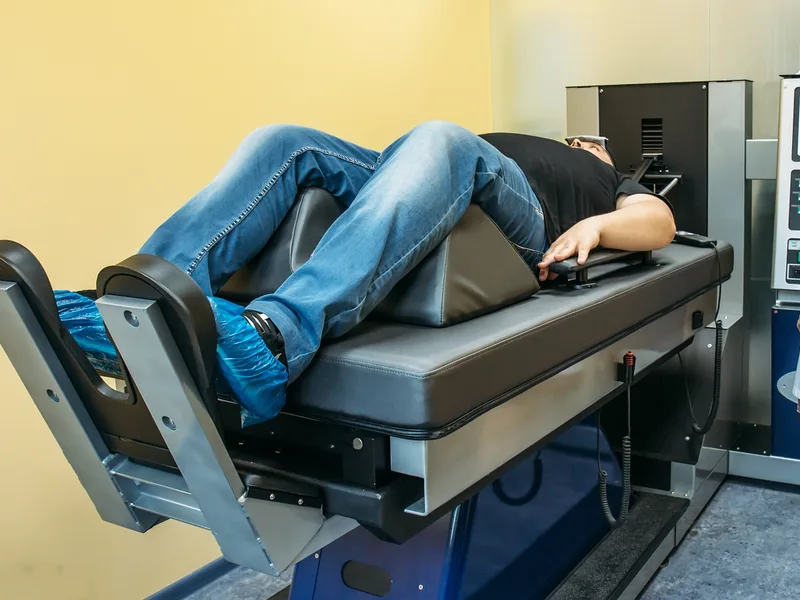
My treatment plan was thoughtfully designed around my specific injuries and included adjustments, the rolling table, neck and lower back decompression, massage therapy, and SoftWave therapy. Every part of my care felt intentional, and every member of the team played an important role in my recovery.
The massage therapists are phenomenal, and the front desk staff are truly the heart of the office. They’re the same wonderful people who help with decompression treatments, and they’re always kind, welcoming, attentive, and encouraging. Every visit feels personal because they genuinely care about how you’re doing. They also went above and beyond to help me navigate my auto insurance claim, making sure I understood my coverage and handling so much of the process. They even offered to connect me with an attorney if I ran into issues with insurance. Knowing they were advocating for me took so much stress off my shoulders. They also have very reasonable self-pay rates, making exceptional care accessible.
I walked into Eagle Trace unsure whether chiropractic care would really make a difference for me. Today, I’m a firm believer because of the life-changing care I’ve received from Dr. Plaster and his incredible team. If you’ve been in a car accident—or you’re simply living with chronic pain—I cannot recommend Eagle Trace Chiropractic highly enough.
Read more GC Gregory Cleary Jul 2026 Very nice facilities, the girls in front excellent, they really are. Dr Jeff Plaster, great guy, polite, and very professional and very thorough, he will explain every thing to you. then he will crack your back and neck , he has a good touch. and you will start to feel good. then you go to the rollers. Love them . the rollers really complete the experience. love them. All in all , its a good experience to get your adjustment for the back . I would say
it's a 5 star experience. Thank you All.
Read more It was a wonderful experience! Highly recommend, I will definitely be back…
Read more Great environment, great people and you will be well taken care of. My daughter and I always look forward to our appointments.
Read more Highly recommend Dr. Jeff and the team at Eagle Trace Spine & Sport. They are professional, friendly, and make the whole experience feel comfortable from start to finish. Dr. Jeff takes the time to explain everything clearly, answers questions without rushing, and communicates in a way that’s easy to understand. It’s obvious that patient care is a priority, and the attention to detail really stands out. If you’re looking for a chiropractic office that values great communication and treats people with respect, Eagle Trace is a great choice.
Read more fs fatima soriano garcia Jul 2026 Best place ever!!!!!
Read more BD Bayana Dagaga Jul 2026 I'm so glad that I found excellent customer service and caregiver physician at Eagle Trace Spine and Sport. If anyone out there who's injured and looking for the best caregiver I recommend Eagle Trace Spine and Sport.
Read more The front desk staff was very polite and professional. The office atmosphere was very welcoming which made me feel I was not just a number. The doctor that saw me was very thorough. He explained his treatment plan and ask me several times if I understood what he was saying to me and if I had any questions.
Read more MB Mauricio Blanco Jul 2026 This place I highly recommend. I have been to several chiropractor but this place is amazing. Dr Jeff and his staff are very professional and friendly. He has the latest equipment to decompress your back which I always do plus the back adjustment by Dr Jeff follow by the massage bed. I leave out of there with great relief from my back pain. Thank you! I will be back!
Read more CP Carol PerronaLevin Jul 2026 Dr. Jeff and his staff are amazing and always interested in helping me feel better. They offer many great treatments including spinal decompression for lower back and cervical spine and it’s very affordable. I am so glad I have found them! Thank you!
Read more Dr. Jeff got my trouble spot in my lower neck first try! A year of dealing with pain immediately relieved after a short visit. You will not be disappointed!
Read more AH Abdinasir Hashi Jun 2026 I come in with a lot of pain lower back muscles and I feel so much better today thank you eagle trace for helping me with care,
Read more Amazing place. Both massage therapists do a phenomenal job. Clearly a strong knowledge of how the body works and as someone who prefers deep tissue, it's my favorite place to go. Great job at really helping fix the underlying issues instead of just making you relax for an hour.
I'm guessing they do a fine job of that if that's what you're looking for. Can't recommend highly enough
Read more I've been going here for over a month now and my initial issues have noticeably improved. I was initially not very optimistic about my ability to reduce my pain but am glad I did since it has made a positive impact on my life.
Read more GH Gregg Hatleli Jun 2026 Dr. Jeff is amazing. Best chiropractor I’ve ever been to. The staff is awesome. Everybody is so friendly. The only place I would ever go.
Read more Just had an appointment today for a back adjustment but it had been two years since I visited eagle trace spine due to Jeff doing an amazing job and treated my back after a years of lower sciatica back pain and having no luck with other places! I definitely recommend coming here if you are dealing with the same issue you won’t be disappointed!
Read more ag abhishek gupta Jun 2026 I started coming to Eagle Trace after a car accident because I was having a lot of back and neck pain. Dr. Jeff has been great to work with and has helped me feel much better over time. They offer many treatments, including spinal decompression, rehabilitation exercises, back roller machines, chiropractic adjustments, and massage therapy. The entire team is friendly, caring, and always takes the time to make sure you are comfortable. What I appreciate most is that I never feel rushed during my appointments. They truly listen and focus on helping you recover. I have always felt well taken care of here. I highly recommend Eagle Trace to anyone looking for quality care for back, neck, or injury-related pain.
Read more LC Lance Christians Jun 2026 I walked in today and was treated fantastic by the entire staff. Dr. Jeff, seemed to genuinely care for my needs. He was able to adjust some stubborn areas that have been difficult for other Chiropractors. I left feeling so much better! I highly suggest and recommend this place. I will continue to seek care here! Thank you, Lance P.s They have an amazing Mike Tyson boxing glove up on the wall. Punch🥊
Read more I had a deep tissue massage with Carol and it was exceptional. I had tightness, stiffness in specific areas and could not stand upright. After her 1hr session I could quickly, comfortably stand upright. I felt better but sore, need a day of recovery being an older gentleman. She very is professional. All of this through a Groupon I purchased. No downsizing in services because of the Groupon like another place ahem-Massage MN. 1 session and she got to the root cause. I definitely will book her services again and the location is not bad. 5 Stars for Carol. UPDATE: 6/3/26 I went in to see Dr. Jeff for Chiropractic Adjustments under my Groupon and I can confidently say Dr Jeff is an exceptional Doctor. He is one of the rare Physicians that has a deep passion for his profession. He utilizes new chiropractic techniques/technologies and is educated on the one that are bad for you. I came in with lower back, calf leg, tight glutes pain and his 1st adjustment made a difference that I can now as I typing this can feel. I am looking forward to his treatments in the future. From my recent past experience with a Groupon Chiropractor-HealthSource Edina I was treated substandard by comparison to Eagle Trace. Many businesses that decide to use Groupon as a way to get clients/customers in truth do not want to do so and it shows by the way they provide substandard service as I received through HealthSource. Eagle Trace Spine and Sport treats his clients/customers with respect, appreciation, enthusiasm, attention to detail and above all the massage and chiropractic services are EXCEPTIONAL. If you are seeking highly educated Chiropractic Services and immediately effective Massage Therapy Services I recommend Eagle Trace Spine and Sport-Burnsville, MN.
Read more GW George Wilson May 2026 I was in a head on collision and had suffered a concussion, whiplash and was experiencing severe neck and back pain with some numbness in my arms and legs. I had previously broken my neck and back and had a fusion done as a result. When speaking with potential chiropractors and massage therapist, I could tell this made them uneasy. Dr. Jeff was thorough in his evaluation and comprehensive in his explanation of what the treatment plan would be and how we would adjust as needed with my preexisting condition. I felt confident in the care I was going to receive. There was massage therapy as a part of the treatment along with soft wave treatments, decompression for my neck and back. Carol was recommended for deep tissue massage. This was a key part of he therapy. We worked together to identify the not just the painful area but what and where the underlying muscle groups where causing the problems. As we worked on different areas in calibration with Dr. Jeff’s treatments. This felt intentional and was effective. I have been through my fair share of chiropractors/ massage therapist. Some betters than others but not like this. I was feeling not only relief from the pain and stress caused by my accident but also issues that had been affecting me for years prior. When I previously addressed this with orthopedic and nerve specialist that had told me surgery was going to be my only option for relief. I am grateful that I found EAGLE Trace Spine & Sport. All off the staff is help understanding and component in there areas they specialize in. I feel like treatment plan is specifically designed for me. I continue to see the results with each passing week. In conclusion the administrative staff has handled all the the billing and paperwork through my insurance company and there has been no out of pocket personal expense. They have also been in contact with my personal injury, attorney. He tells me he is impressed with the leave of detail in there records and keeping him apprised of all the necessary information that will be required when it come to a settlement. The accident was unfortunate, it has been hard and stressful not being able to work. The care I receive from the whole staff and the professional way the documentation and billing has been handled has really helped my physical and mental recovery. I would recommend this team on all aspects of care.
Read more Dr. Jeff and his team are wonderful! They treat their patients like family. Treatment is explained thoroughly and questions are encouraged and answered. I've been there during a really busy time and thought that I would be waiting awhile to move through my treatment regimen. I was amazed at how this team worked together to keep every patient informed and moving efficiently through the different areas.
Read more Best chiropractic clinic in the twin cities! Dr Jeff & Team are very welcoming and compassionate about the quality care they provide.
Read more My wife and I came here about two years ago and absolutely loved our experience. I had to step away after undergoing rotator cuff surgery, and life became very busy, so I hadn’t been back until today. What I appreciate most about this place is how personal and welcoming it feels. There’s a genuine family atmosphere that you don’t find everywhere, and after two years they still remembered who I was. That truly says a lot about the people here. For the past two weeks, I haven’t even been able to put my own socks on because of my back pain. Today I came in for spinal decompression and an adjustment, and I already feel about 70% better. I’m incredibly grateful for this place and the care they provide. 🙏
Read more NW Nichelle Wierson May 2026 All I got to say !!!! Wonderful place everyone was so kind and helpful and explained everything…. Love it !!!! Go here !!!
Read more E& Ernie & Sarah Hockenberger May 2026 Very welcoming, polite and funny employees, dr. Jeff is amazing at his job, I wouldn't go anywhere else. 🍀BIG ERN MC CRACKEN 🍀
Read more I’ve had a great experience working with Dr. Jeff. He is very easy to talk to and made me feel comfortable right away. He has the kind of personality that makes you feel like you’ve known him for a long time. Super friendly, professional, and genuine.
Read more I’ve had a great experience at Eagle Trace Chiropractic! The team is professional, welcoming, and truly cares about their patients’ well-being. From the moment you walk in, the atmosphere is calm and friendly, and they take the time to listen and tailor care to your specific needs. I’ve noticed a real improvement since starting treatment, and I always leave feeling better than when I walked in. Highly recommend to anyone looking for quality chiropractic care!
Read more I use to go to physicial Group but they wasn’t doing nothing for me. So I was on Facebook and I ran across Eagal Trace Spine and sports. I was hesitated born there because the last chiropractic I went to they didn’t help me. They were just hurting me, but I’m glad I did go.Going to Eagle Trace Spine & Sports really helped me. They help me out with my Car Accident and I really enjoyed going there because I don’t leave any pain like I did with the other chiropractic. So I gave this company 10 stars because I really enjoy what they do. They are nice compassion and they always smile when I come in.
Read more Life changing care! The entire staff is amazing. The girls in the front are so sweet and helpful. Dr. Jeff does an incredible job listening to my needs and customizing treatment plans. I’m starting to feel relief after many years with chronic pain. I look forward to my morning appointments knowing I’m going to feel better every time I walk out. Highly recommend.
Read more Went in for a massage, came away feeling so much better after getting more therapy on my back, the staff are wonderful people and Jeff always takes good care of me, Love them all!!
Read more MM Michael Maselter Apr 2026 I’m a career firefighter and have suffered from a back injury from the job for the last 8 years. I was sent to a chiropractor years ago after reinjuring my back, initially I felt a little relief from my injury, but it never really went away and after 3 years of going to them I wasn’t getting better. I started to think I was going to spend the rest of my life with some degree of back pain. I stumbled across Dr Jeff at my daughters gymnastics class and we started talking about my injury. He invited me to his practice to see how he could help relive my pain. Within the first week I was feeling better than I had felt in 8 years since my initial back injury, week 2 was continued progress in reducing my pain to almost nothing. The truest test of his great work has been how good I’ve felt after shoveling and snow blowing after these last few storms. Dr Jeff’s multiple disciplines in chiropractic care and ability to customize your treatments to best suit your injury, coupled with his genuine care and concern are Amazing! When you tell him how your feeling from visit to visit he is listening and using your input to to maximize the output of your care. This is Good Ole Fashioned Service, his whole office has a great attitude and do their Best to work with you.
Read more JC Joshua Conroy Apr 2026 Great great great! I've been to a few chiropractic clinics before and Dr Plaster and the staff are phenomenal! He's a straight forward no BS practitioner who truly cares and wants you to get back to your best. If there's a therapy that will help you, he'll present that option. If there's something that you've had done before that won't help, he'll let ya know it's not beneficial and why it is not. Just all around GREAT in every way!
Read more NG Natalie Green Mar 2026 Eagle Trace Spine and Sport gave me such great care today! Dr. Jeff Plaster was professional and kind. He took his time explaining what he was going to do and how it would help me. I really felt like I was in good hands. I also got a massage and the massage therapist I had was amazing!! 5 stars as well. Definitely check this place out if you're looking for exceptional care!
Read more Love the level of care the whole staff provides. Jeff is a great doctor and great dude.
Read more GC Gregory Cleary Mar 2026 Very nice facilities, the girls in front excellent, they really are. Dr Jeff Plaster, great guy, polite, and very professional and very thorough, he will explain every thing to you. then he will crack your back and neck , he has a good touch. and you will start to feel good. then you go to the rollers. Love them . the rollers really complete the experience. love them. All in all , its a good experience to get your adjustment for the back . I would say it's a 5 star experience. Thank you All.
Read more The staff is awesome! They remember your name and keep a close eye on what stage you are at in your therapy. It's almost like they are talking to each other in their ear! Lol
Read more ML Masha Litvinovich Mar 2026 Great place to get adjusted! The chiropractor is very professional, knowledgeable, and makes you feel comfortable during the visit. Highly recommend to anyone looking for quality chiropractic care
Read more MA Mamadou Attigou Sow Mar 2026 Dr Jeff and he’s team are perfect, I recommend 💯%
Read more SL Sengmanivan Luangamath Feb 2026 10/10 everyone is so nice, this is the first chiropractic place I've been to in a long time so it was refreshing to see everyone with a smile on their face and definitely calmed the nerves for the first session
Read more DD Darrell Dressen Feb 2026 DR. Jeff and his sraff arevery caring, but professional at the same time. They have been taking care of me for several years.
Read more ME Marcia ETrelles Jan 2026 Amazing staff and quality care
Read more I’m leaving this review for Dr. Jeff Plaster and his entire team for their amazing service and consistently kind, positive attitudes. I originally walked into Dr. Jeff’s office based on a Google review, and I truly hope others come across this one as well. I came in with a fractured bone in my left hand along with full-body soreness from a tragic accident, and I am still currently receiving chiropractic care from him. During my treatment, I was introduced to a machine called SoftWave to help my fractured bone heal faster, and I honestly believe it made a huge difference. While the SoftWave treatment can be a bit painful at times, it was absolutely worth it. My bone healed faster than expected, and I was able to get out of my splint/cast and return to work much sooner than anticipated. I’m very grateful for the care and support I’ve received and highly recommend Dr. Jeff and his team.
Read more YZ Yelena Zubina Jan 2026 The people are very friendly and awesome and Doctor Jeff is very kind and will try to give you the best outcome he’s able to give! Love coming to the appointment!
Read more JB Jacob Brekken Dec 2025 Well oiled machine and very knowledgeable staff. I would highly recommend!
Read more CZ Cynthia Zager Dec 2025 Very professional and honest. After three sessions my vertigo was almost gone. I always feel so good after a session too! Dr Jeff is awesome and I highly recommend him if looking for a medical chiropractor.
Read more Great explanation of X rays and spine adjustment. Excellent staff.
Read more MP Michelle Pryor Dec 2025 I have been dealing with neck back in lake issues for 6 years now. I went to eagle tree spine in sport for the first time last week. They have done things to help me that none of my doctors in 6 years have ever done. I walked out of their office noticing a positive difference. I am very satisfied with the treatment and care that everyone in the office has given me. Thank you so much everyone. Especially the Dr. Jeff Who is very caring, Concerned and eager to help get me feeling better. And explains everything Clearly so I understand exactly what is going on.👍🏼👍🏼👍🏼
Read more Dr Jeff and crew are very thorough and professional. Initial exam very comprehensive. They have a lot of equipment and tools. Highly recommend!
Read more IC Isabel Christianson Nov 2025 Exceptional service, Eagle Trace is committed to excellence. I highly recommend their services. The customer service of the entire staff is beyond compare and Dr. Plaster’s knowledge, expertise, and relatability is the best I have seen after visiting a number of chiropractors previously.
Read more GJ Gabby Jackson Nov 2025 Great staff and service!
Read more Great experience here so far and have been feeling a lot better. My daughter of 10 months also has to come here due to an accident and she’s been a lot better too. 10/10 recommend if you need an adjustment!
Read more TC Tyler Caracofe Nov 2025 Truly exceptional service and care. Dr. Jeff Plaster is informative and completely transparent with insurance and treatment plans. He takes the time to explain his findings and recommendations. His front end associates are all extremely pleasant and professional. Fatima is a delight and the overall experience is far superior to any other chiropractors I have been to in the past. Thank you all for your commitment to high quality patient care and exceptional guest service.
Read more I'm a patient of Dr. Jeff Plaster's. He is doing a great job with my treatment. I've tried other chiropracters since mine retired & Dr Jeff is by far the best I've found in Bloomington & Burnsville. The office staff are so friendly & welcoming. I would highly recommend Eagle Trace Spine & Sport!
Read more LS Linda Sanders Oct 2025 5 Eagle Trace Spine & Sport is excellent! Dr Plaster is knowledgeable, kind, he listens to your concerns and responds accordingly. The staff is awesome. I can't praise them enough. The space is always neat, clean, and sanitary/sanitized between each patient. It's awesome there!
Read more NL Nancy Leighton Oct 2025 Was very surprised by the friendliness and knowledge of the staff. Dr. Jeff was even more helpful and knowledgeable. Best treatment in over 70 years that I have had. An excellent explanation is given for what is going to be done to help you out, along with great results. Wish I had found him years ago! You won’t be disappointed!
Read more Dr. Plaster and his team are awesome doing soft wave treatments can’t believe how great they work!! Answer to prayer
Read more Dr. Jeff is great
Read more Dr Plaster is the best around!
Read more KA Kowsar Abdille Sep 2025 I had the best experience ever the staff and the doctors are very friendly from the moment you walk in to the door Until you leave. If I could give more then a five point I would 🙏🙏🙏
Read more